
Drying is one of the most widely used preservation methods in the food industry.
Industrial food processors typically rely on two main drying approaches: batch drying systems and continuous drying systems.
Each method has unique advantages, limitations, and suitable applications depending on production scale, product characteristics, and operational requirements.
This article explores the differences between batch and continuous drying systems and how manufacturers choose the right solution.
What Is a Batch Drying System?
A batch drying system processes a fixed quantity of material at a time. Food products are loaded into the dryer, the drying cycle is completed, and then the dried material is unloaded before the next batch begins.
Batch dryers are widely used in food processing industries such as fruit drying, dairy powder production, spices, and specialty ingredients.
One of the biggest advantages of batch drying is process control and flexibility. Operators can easily adjust parameters such as temperature, airflow, and drying time for each batch, making it suitable for products with varying moisture content or sensitive ingredients.
Advantages of Batch Drying
1. High Process Flexibility
Batch dryers allow manufacturers to process different products using the same equipment by adjusting operating parameters. This makes them ideal for facilities producing multiple product types or small production runs.
2. Precise Quality Control
Because each batch is processed separately, operators can closely monitor drying conditions to maintain product quality and prevent overheating or over-drying.
3. Lower Initial Investment
Batch systems usually have simpler designs and lower installation costs compared with continuous dryers, making them suitable for small and medium-sized food manufacturers.
4. Easier Cleaning and Product Changeover
Since the process stops between batches, equipment can be cleaned thoroughly, reducing cross-contamination risks in food production.
Limitations of Batch Drying
Despite these advantages, batch systems also have drawbacks. They typically require manual loading and unloading, leading to higher labor requirements. In addition, downtime between batches can reduce overall production capacity.
What Is a Continuous Drying System?
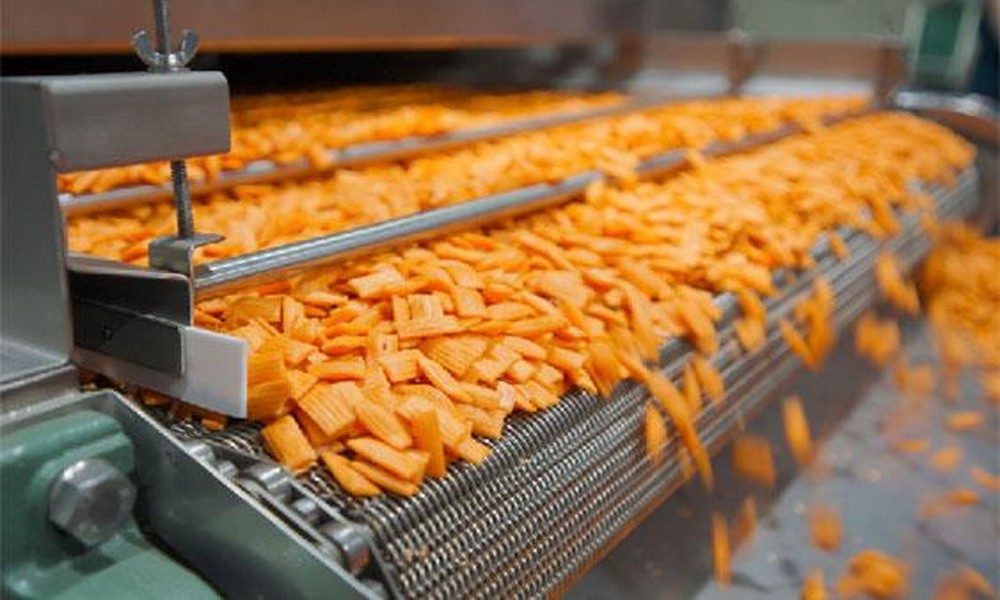
A continuous drying system processes food products in a constant flow. Wet material enters the dryer continuously, passes through a heated drying zone, and exits as a dried product.
Common continuous dryers used in food manufacturing include belt dryers, rotary dryers, and continuous spray dryers.
These systems are designed for large-scale industrial production where consistent output and high throughput are essential.
Advantages of Continuous Drying
1. High Production Capacity
Continuous dryers can operate 24/7, processing large volumes of food products without interruption. This makes them ideal for large-scale food manufacturers.
2. Improved Energy Efficiency
Continuous systems often use heat more efficiently because they do not need to repeatedly heat and cool the drying chamber. As a result, energy consumption per unit of product is typically lower.
3. Consistent Product Quality
Because the drying conditions remain stable throughout the process, continuous systems can produce highly uniform products with consistent moisture levels.
4. Reduced Labor Requirements
Automation allows continuous dryers to operate with minimal manual intervention, reducing labor costs and improving production efficiency.
Limitations of Continuous Drying
Continuous drying systems generally require higher capital investment and more complex installation. They are also less flexible when switching between different products, which can require production line adjustments.
Key Differences Between Batch and Continuous Drying
|
Feature |
Batch Drying |
Continuous Drying |
|---|---|---|
|
Production Mode |
Processes fixed batches |
Processes material continuously |
|
Production Capacity |
Lower throughput |
High throughput |
|
Flexibility |
Highly flexible |
Limited flexibility |
|
Energy Efficiency |
Moderate |
Higher efficiency |
|
Labor Requirement |
Higher |
Lower due to automation |
|
Initial Investment |
Lower |
Higher |
Choosing the Right Drying System
The choice between batch and continuous drying depends on several factors:
Production Volume
High-volume food processing facilities often prefer continuous dryers because they support large-scale production without downtime.
Product Variety
Manufacturers producing multiple food products may benefit from batch drying due to its flexibility and easier changeovers.
Budget and Investment
Small businesses or startups may choose batch systems because they require lower upfront costs.
Product Sensitivity
Delicate or heat-sensitive foods sometimes benefit from the slower, carefully controlled conditions of batch drying.


